
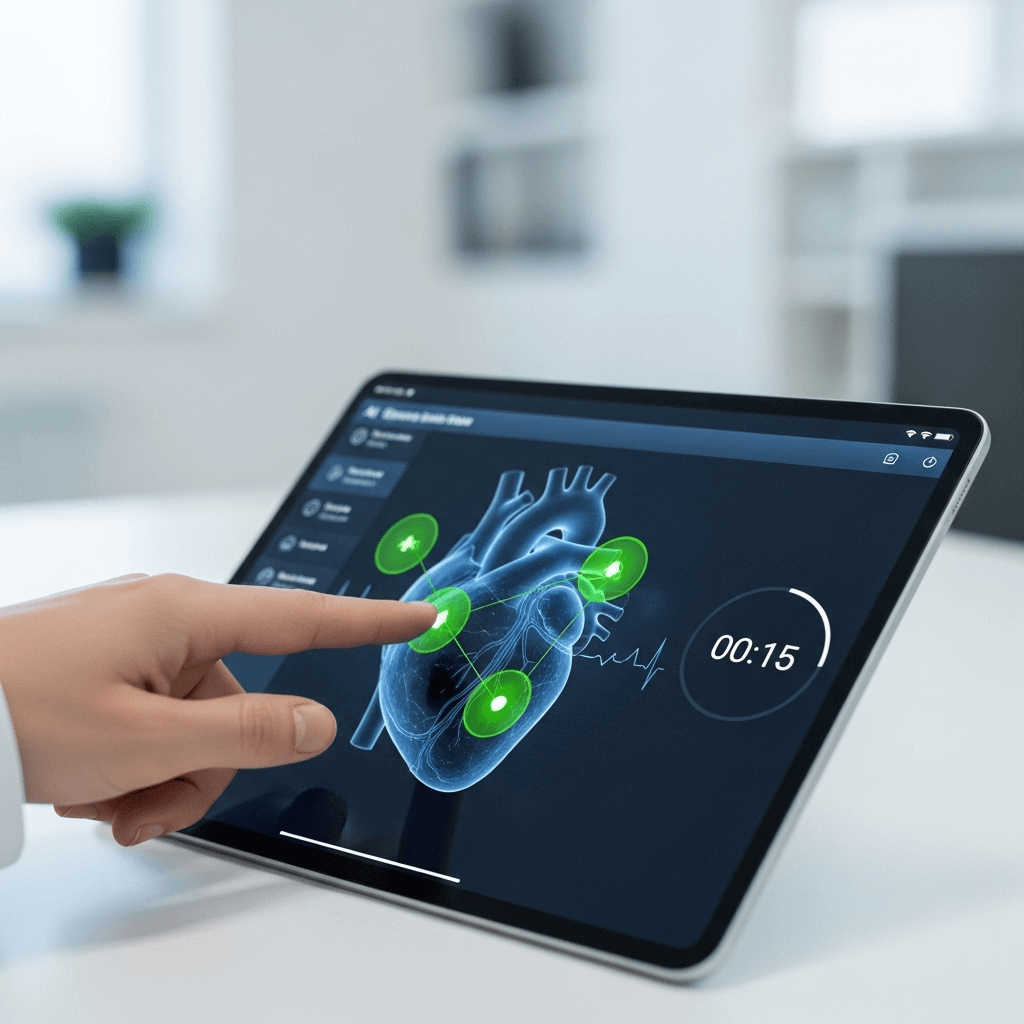
AI Detects Deadly Heart Conditions in 15 Secs with High Accuracy
A groundbreaking new AI tool is transforming how we detect serious heart problems. This innovative technology can identify three deadly heart conditions in a mere 15 seconds, and remarkably, it demonstrates greater accuracy than a human doctor. This advancement promises to revolutionize early diagnosis and potentially save countless lives. We will delve into how this incredible AI works and its profound implications for cardiac health.
The Breakthrough in AI-Powered Heart Diagnosis
In a significant leap forward for medical technology, researchers from the University of California San Francisco have developed an artificial intelligence (AI) tool capable of detecting three critical heart conditions with unprecedented speed and accuracy. This remarkable AI analyzes standard electrocardiogram (ECG) data, which measures the electrical activity of your heart. Furthermore, the entire process takes just 15 seconds, making it incredibly efficient.
Specifically, this new AI heart detection system targets three often-missed and life-threatening conditions: pulmonary hypertension, cardiac amyloidosis, and hypertrophic cardiomyopathy. These deadly heart conditions can progress silently, causing severe damage before symptoms become apparent. However, the AI’s ability to spot subtle patterns in ECGs, which traditional analysis might overlook, provides a vital early warning. For instance, pulmonary hypertension involves high blood pressure in the arteries leading to the lungs and heart, while cardiac amyloidosis occurs when abnormal proteins build up in the heart muscle, making it stiff. Lastly, hypertrophic cardiomyopathy is a condition where the heart muscle thickens, making it harder to pump blood. Consequently, early heart diagnosis is crucial for effective treatment and improved patient outcomes.
How does this cardiac health AI achieve such precision? The technology employs advanced machine learning, having been trained on vast datasets of ECGs from both healthy individuals and those with these specific conditions. This extensive training allows the AI to recognize intricate patterns and subtle indicators that are often invisible to the human eye, even for experienced cardiologists. Therefore, its performance surpasses human doctors in identifying these specific conditions, offering a new benchmark for diagnostic accuracy in cardiology.
Transforming Healthcare: The Impact of Early Detection
The implications of this life-saving technology are truly immense. Firstly, the ability to detect these serious heart conditions quickly and accurately can dramatically reduce diagnostic delays. Traditionally, diagnosing these conditions can be a lengthy process, often involving multiple specialist consultations and more invasive tests. Moreover, during this delay, a patient’s condition can worsen significantly. This AI tool, conversely, offers a swift and non-invasive screening method.
Furthermore, early identification of pulmonary hypertension, cardiac amyloidosis, and hypertrophic cardiomyopathy allows doctors to intervene sooner. Prompt treatment can slow disease progression, alleviate symptoms, and ultimately improve the quality of life and longevity for patients. Thus, this AI doesn’t just diagnose; it empowers timely medical action. As a result, it significantly reduces the burden on healthcare systems by streamlining the diagnostic pathway and potentially preventing the need for more complex, costly interventions later on.
While the AI shows remarkable AI accuracy in medicine, it’s important to understand that it serves as a powerful assistant to doctors, not a replacement. Instead, it acts as a highly sensitive screening tool, flagging potential issues that human cardiologists can then investigate further with their expertise and clinical judgment. Looking ahead, this innovative approach could pave the way for similar AI applications in detecting other diseases, promising a future where faster, more accurate diagnoses become the norm in medical practice.
This revolutionary AI tool represents a monumental step forward in cardiac care, offering unparalleled speed and accuracy in detecting deadly heart conditions. By significantly improving early diagnosis, this technology holds the potential to save countless lives and dramatically enhance patient outcomes. As AI continues to integrate into medicine, we can anticipate a future with more precise and preventative healthcare for everyone. Find more details on this development at Daily Mail Online.