
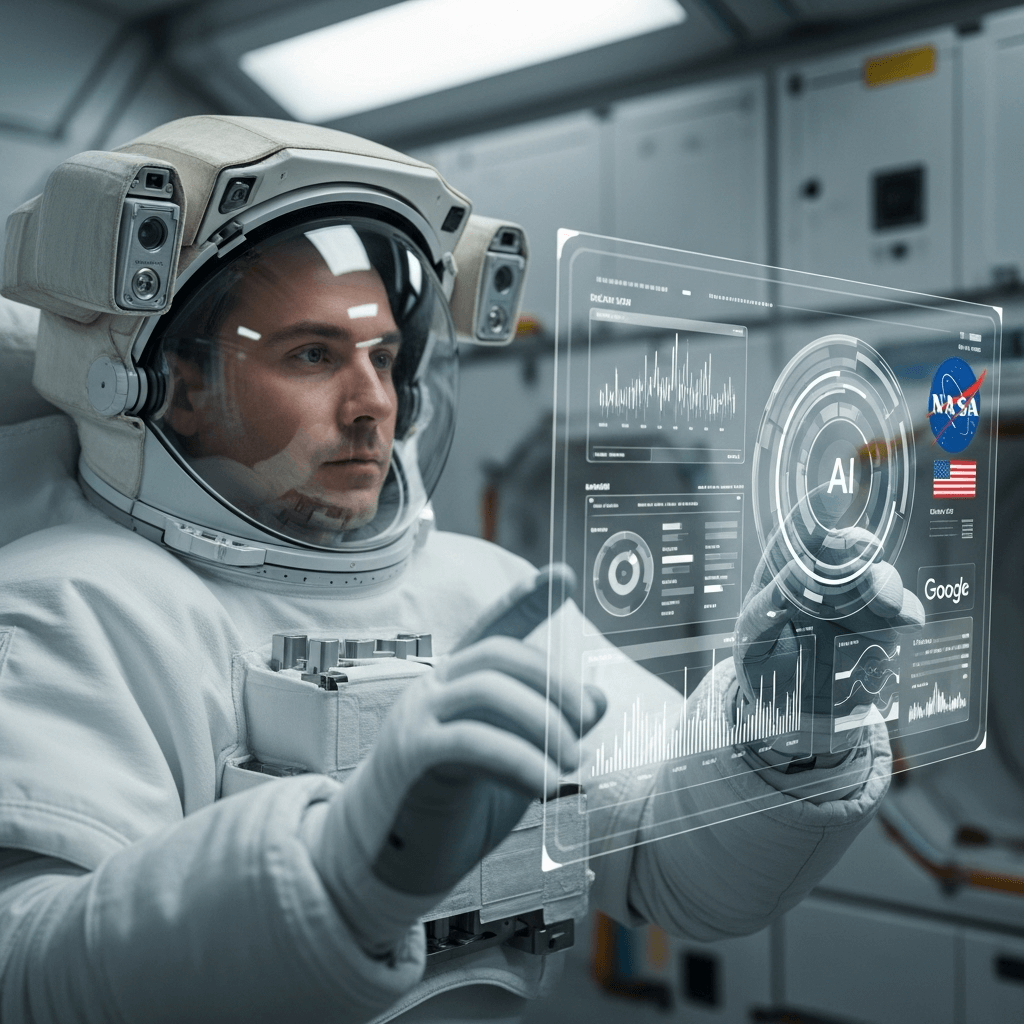
NASA Google AI: Revolutionizing Astronaut Health in Space
Space travel presents unique health challenges for astronauts. Recognizing this, NASA and Google have joined forces to develop an innovative health AI tool. This groundbreaking collaboration aims to provide crucial medical support, ensuring the well-being and safety of spacefarers on extended missions. This article explores how this advanced technology will revolutionize astronaut healthcare.
Pioneering Health in Space: The NASA Google Partnership
Firstly, the demands of long-duration space missions expose astronauts to unique health risks, from radiation exposure and microgravity effects to psychological stress and the potential for medical emergencies far from Earth. Given the unique demands of this environment, immediate access to comprehensive medical expertise is severely limited. Astronauts must often manage minor ailments themselves, or rely on delayed communication with ground control. Furthermore, sending a fully equipped hospital into space is impractical, necessitating innovative solutions for remote medical care. This critical need led to the remarkable Google NASA collaboration on an advanced health AI tool for astronauts.
This partnership brings together NASA’s unparalleled expertise in human spaceflight and the harsh realities of space environments with Google’s cutting-edge capabilities in artificial intelligence and machine learning. As a result, they are developing a sophisticated system designed to act as a virtual medical assistant, providing vital support when direct human medical intervention from Earth is impossible. Moreover, this initiative represents a significant step forward in space medicine AI, fundamentally changing how astronaut health is managed in the vast emptiness of space.
Empowering Astronauts with Intelligent Medical Support
Specifically, this innovative NASA Google AI tool will perform multiple critical functions to safeguard astronaut health. It will continuously monitor astronauts’ vital signs, analyze biometric data, and track environmental factors within the spacecraft. Should an astronaut develop symptoms, the AI can cross-reference these with extensive medical databases, offering potential diagnoses and guiding crew members through appropriate treatment protocols. Consequently, this system can provide immediate, data-driven medical advice, reducing the need for constant, real-time communication with Earth-based medical teams, which is often hampered by communication delays.
Beyond immediate care, this sophisticated system offers predictive capabilities. By analyzing health trends and environmental data, the AI could potentially flag early warning signs of developing conditions, allowing for proactive interventions before health issues become critical. This represents a significant leap in AI for astronaut health, enhancing both mission safety and the overall well-being of the crew. Furthermore, the advancements made in this health tech in space could eventually translate into benefits for remote and underserved communities on Earth, demonstrating the broad impact of this pioneering work on the future of space travel and healthcare innovation.
The collaboration between NASA and Google marks a significant leap in space medicine. This advanced AI health tool promises to safeguard astronaut well-being, enabling longer, safer missions. Furthermore, it paves the way for future medical innovations both in space and potentially for remote healthcare on Earth. This partnership truly represents the next frontier in health technology.
For more detailed information, please refer to the original source: STAT News