AI Designs New Antibiotics, Combats Drug-Resistant Superbugs
The global fight against drug-resistant bacteria faces a formidable challenge, but a groundbreaking innovation offers new hope. Generative artificial intelligence (AI) is now revolutionizing antibiotic discovery, moving beyond traditional methods. This advanced technology doesn’t just analyze existing drugs; it actively designs new molecules capable of combating even the most stubborn drug-resistant bacteria, paving the way for a new era in medicine.
The Urgent Threat of Antibiotic Resistance and AI’s Powerful Answer
Currently, the world confronts a growing health crisis: antibiotic resistance. Throughout history, antibiotics have been a cornerstone of modern medicine, effectively treating bacterial infections. However, bacteria constantly evolve, and consequently, many existing drugs are becoming less effective, or entirely useless, against increasingly resilient strains. This escalating problem, often leading to the rise of “superbugs,” results in longer hospital stays, higher healthcare costs, and, tragically, increased mortality rates globally.
Historically, the process of antibiotic discovery has been painstakingly slow and incredibly expensive. Scientists often spent years, even decades, sifting through millions of compounds, using trial-and-error methods to find a single effective drug. Moreover, once discovered, a new antibiotic still requires extensive testing and regulatory approval before it can reach patients. Therefore, there is an urgent and critical need for innovative approaches to develop new antibiotics rapidly and efficiently.
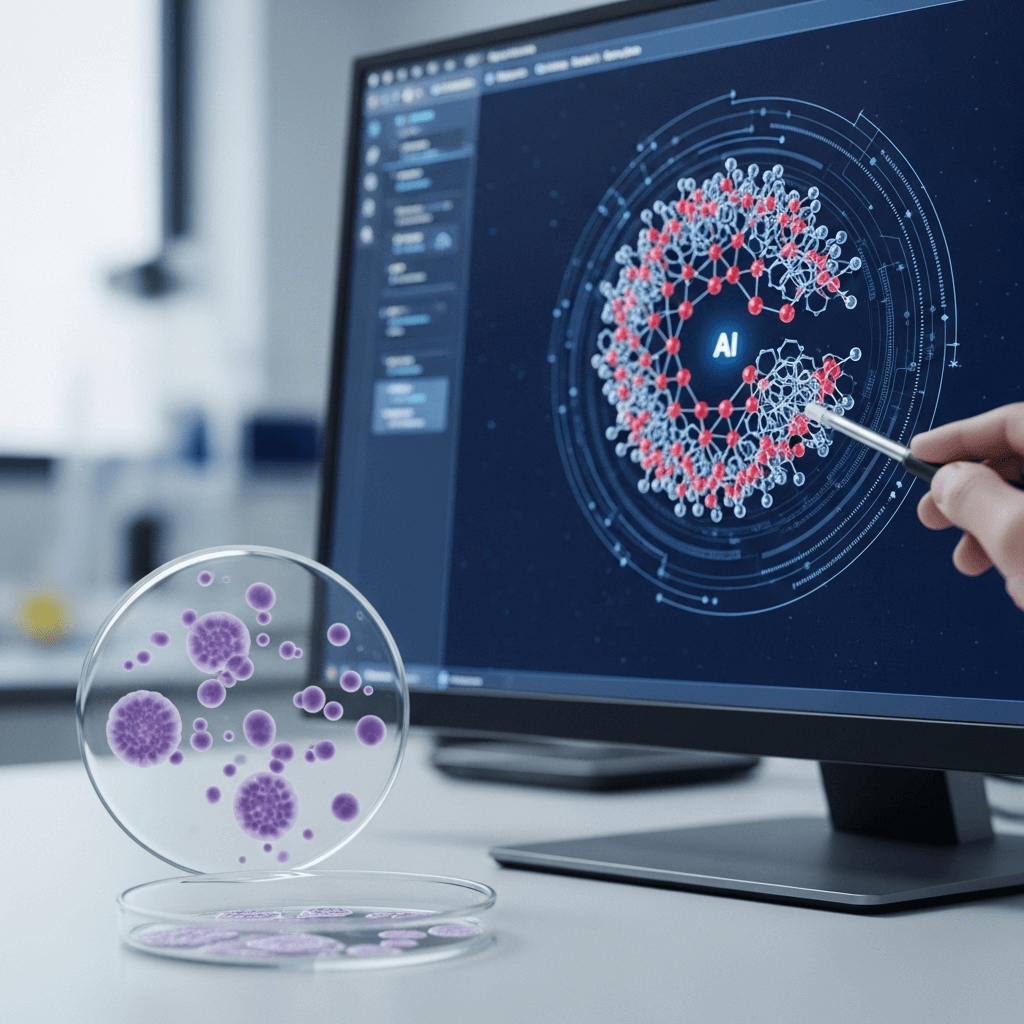
In response to this crisis, generative AI emerges as a game-changing solution. Much like AI models can generate realistic images or compelling text, these powerful algorithms are now being trained to understand the intricate rules of chemistry and molecular biology. Specifically, they learn from vast datasets of known molecules, including their structures, properties, and interactions with biological systems. Consequently, instead of merely identifying existing compounds, AI for antibiotic discovery can create entirely novel chemical entities designed from the ground up to kill bacteria.
Designing Life-Saving Molecules: How Generative AI Fights Superbugs
The true power of generative AI in medicine lies in its ability to go beyond prediction and into true creation. Instead of laboriously synthesizing and testing countless compounds in a lab, AI-powered drug discovery can intelligently design new molecules that possess desired characteristics. For instance, researchers can instruct the AI to generate molecular structures that are specifically toxic to bacterial cells but safe for human cells. Furthermore, the AI can be guided to create compounds that target unique bacterial pathways or structures, thus bypassing established resistance mechanisms that render older drugs ineffective.
Here’s how this groundbreaking process works: The AI models analyze the “rules” of molecular design, understanding how atoms bond and how specific arrangements create particular properties. Then, given a set of criteria – such as targeting a particular bacterial protein or having a specific molecular weight – the AI generates a multitude of unique, novel chemical structures. Crucially, many of these AI-generated antibiotics would likely never be discovered through traditional methods due to their novelty and complexity. The AI acts as a creative chemist, proposing solutions that human intuition alone might miss.
As a result, this technology dramatically accelerates the earliest, most challenging stages of drug development. What once took years of laboratory work can now be simulated and designed computationally in a fraction of the time. Early research has shown tremendous promise, with AI-designed compounds demonstrating efficacy against a range of persistent drug-resistant pathogens, effectively fighting superbugs. This shift from “discovery” to “design” fundamentally changes our approach to combating bacterial threats, offering a faster, more targeted, and ultimately more effective path to new treatments.
Generative AI is fundamentally transforming antibiotic discovery, offering a crucial lifeline in the ongoing battle against drug-resistant bacteria. By intelligently designing new molecules, this cutting-edge technology promises faster, more targeted, and highly effective solutions against perilous superbugs. Ultimately, this innovation represents a significant leap forward, bolstering our capacity to combat antibiotic resistance and safeguard global public health for generations to come.
For more information, you can read the original article: https://phys.org/news/2025-09-antibiotics-images-generative-ai-mol-ecules.html (Source: Phys.org)