
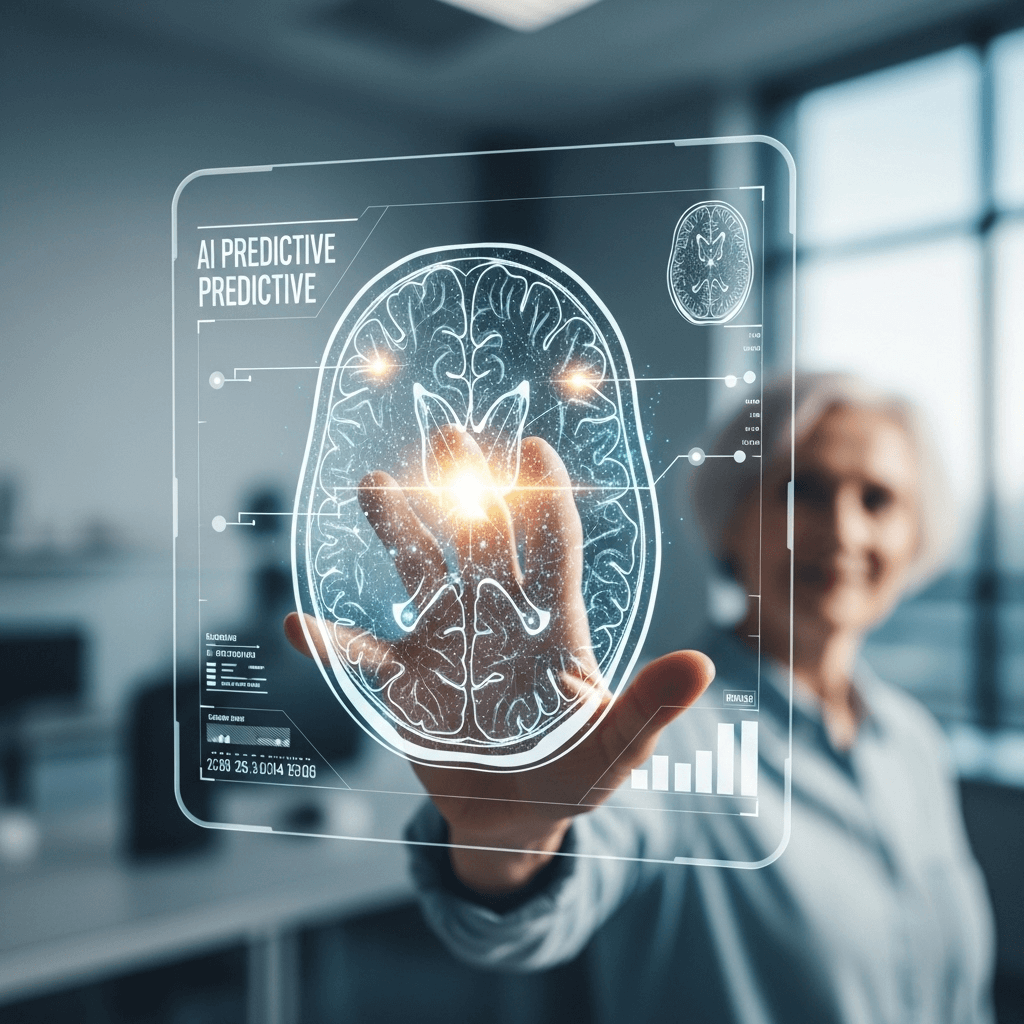
AI Accurately Predicts Alzheimers Years Before Onset
A remarkable advancement in medical science offers new hope against Alzheimer’s disease. An innovative AI tool now accurately predicts key markers of this challenging condition years before symptoms appear. This groundbreaking technology uses deep learning to identify subtle brain changes, paving the way for significantly earlier detection and potentially life-changing interventions, profoundly impacting patient care and future research.
Revolutionizing Early Alzheimer’s Detection with AI
For too long, diagnosing Alzheimer’s disease has been a challenging endeavor, often occurring late in its progression after significant cognitive decline has already taken hold. However, a revolutionary breakthrough is poised to change this narrative. Researchers at Tohoku University in Japan have developed a highly sophisticated AI tool for Alzheimer’s, designed to identify the earliest indicators of the disease with impressive accuracy.
This cutting-edge technology leverages advanced deep learning algorithms to meticulously analyze brain MRI scans. Specifically, it focuses on detecting subtle signs of brain atrophy, which is the shrinking of brain tissue, in a crucial area called the entorhinal cortex. Interestingly, this region plays a vital role in memory formation and is typically one of the very first areas to show damage in individuals who will eventually develop Alzheimer’s disease. Therefore, by precisely identifying these minute structural changes, the AI provides an invaluable early warning, marking a significant step forward in early Alzheimer’s detection.
The Power of AI in Predicting Future Brain Changes
What makes this particular AI tool for Alzheimer’s prediction truly extraordinary is its ability to not just spot current damage, but also to look ahead. The system effectively predicts future brain changes, including the progressive atrophy of the entorhinal cortex and, consequently, the likelihood of Alzheimer’s disease onset. This forward-looking capability offers unprecedented insight into a patient’s potential trajectory. In fact, this non-invasive method achieved a remarkable 90% accuracy rate in its predictions.
Consequently, the implications for patient care are profound. Firstly, this allows medical professionals to initiate interventions much earlier, potentially delaying or even mitigating the full onset of the disease. Moreover, early Alzheimer’s detection facilitates personalized treatment plans, enabling patients and their families to make informed decisions about lifestyle, care, and future planning. Furthermore, this AI tool offers significant advantages for pharmaceutical research, as it can help identify suitable candidates for clinical trials at the earliest, most treatable stages, thereby accelerating the development of new therapies. Ultimately, this innovation highlights the immense potential of AI in healthcare, ushering in a new era for managing and potentially conquering neurodegenerative diseases.
Ultimately, this innovative AI tool marks a significant leap forward in our battle against Alzheimer’s disease. By accurately predicting key markers years in advance, it transforms the landscape of diagnosis and intervention. This breakthrough offers immense hope, enabling earlier support for patients and accelerating the search for effective treatments. It truly underscores AI’s profound potential to revolutionize medical care and improve countless lives.
For more information, visit: HospiMedica