
Top Executives Use AI Daily: Productivity, Strategy, Growth
In today’s fast-paced corporate world, artificial intelligence (AI) is often discussed as a disruptive force. However, for many top executives, AI is not just a future concept; it is a practical tool they actively use every day. Leading CEOs and a chief commercial officer are leveraging AI to refine strategies, boost productivity, and make sharper decisions. This article explores the real-world applications of AI by these influential leaders, moving beyond mere speculation to reveal tangible benefits.
AI as a Strategic Partner and Productivity Powerhouse
Boosting Efficiency and Personal Productivity
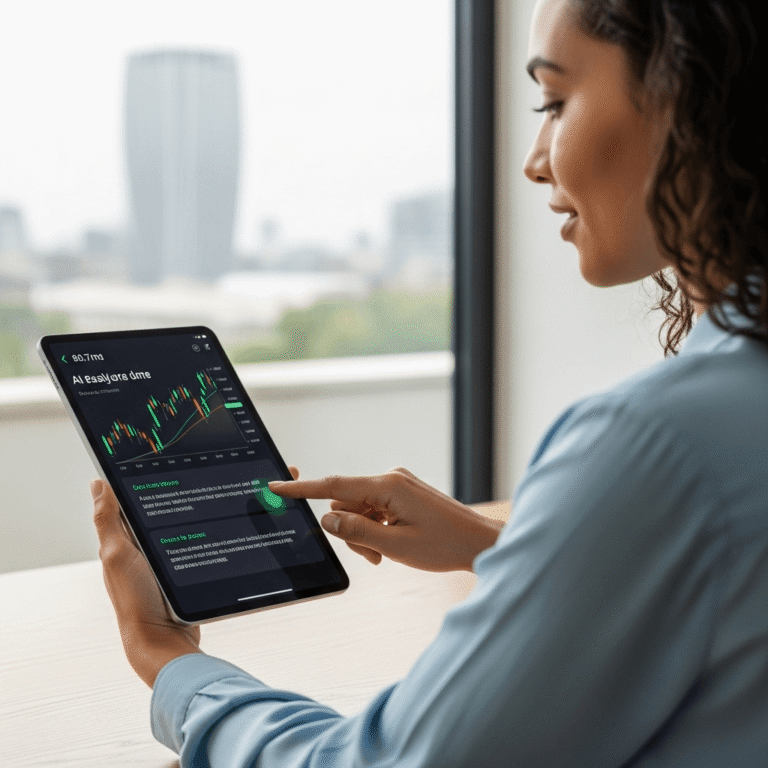
Top executives actively integrate AI into their daily routines to enhance personal productivity and streamline operations. Initially, many leaders turn to AI for tasks that consume valuable time but are essential for effective management. Michael Dell, CEO of Dell Technologies, for instance, utilizes AI as an intelligent assistant to significantly “supercharge productivity.” He relies on it to quickly summarize lengthy meeting notes, capturing key decisions and action items, and to draft clear, concise emails, saving him considerable time. Furthermore, this frees up his mental energy to focus on more complex, high-level strategic challenges. Similarly, AI helps in organizing vast amounts of information, making it readily accessible for quick review and informed responses. Consequently, leaders can manage their overflowing inboxes and busy schedules with greater ease, allowing them to allocate more time to impactful work.
Enhancing Strategic Thinking and Decision-Making
Beyond basic efficiency, executives are powerfully using AI as a sophisticated strategic partner. Moreover, AI serves as a dynamic “sparring partner” for brainstorming and challenging assumptions. Lynn Jurich, former CEO of Sunrun, for example, treats AI as an executive coach and a sounding board for complex strategic discussions. She actively uses it to brainstorm new ideas and to test the robustness of her plans, prompting her to consider angles she might otherwise miss. In addition, Aaron Levie, CEO of Box, leverages AI for idea generation and problem-solving, finding that it effectively pushes him to “challenge assumptions.” This rigorous intellectual engagement with AI leads to more comprehensive and resilient strategies. Specifically, AI helps these leaders synthesize vast datasets, drawing out critical insights from customer feedback or financial reports, as demonstrated by Anjali Sud, former CEO of Vimeo, who uses her personal AI assistant for this purpose. Thus, AI empowers executives to make faster, more data-driven decisions, reducing risks and seizing opportunities.
AI Driving Innovation and Future Growth
Unlocking New Opportunities and Market Insights
Forward-thinking leaders recognize AI’s profound ability to reveal untapped potential and deeper market understanding. Beyond boosting productivity, AI plays a crucial role in exploring new opportunities and discerning market trends. Sarah Franklin, Chief Commercial Officer at Salesforce, for example, depends on AI for extensive research into market dynamics and competitor landscapes. Her team uses AI to identify emerging trends and pinpoint lucrative new opportunities that might otherwise remain unseen. Additionally, AI processes massive amounts of external data, from social media sentiment to global economic indicators, providing a holistic view of the market. Through this analytical power, executives gain a clearer picture of where to invest resources and how to position their companies for future success. Ultimately, AI acts as a vital compass, guiding leaders toward innovative ventures and sustainable growth strategies.
Facilitating Complex Problem Solving and Innovation
For complex challenges and the pursuit of innovation, AI proves invaluable in accelerating solutions and fostering creativity. Furthermore, executives are applying AI to tackle intricate business problems that require multifaceted analysis. Aaron Levie of Box uses AI not just for ideation but also for systematically breaking down complex problems and identifying potential solutions. This allows for a more structured and efficient approach to resolving significant operational or strategic hurdles. In essence, AI can simulate various scenarios and predict outcomes, helping leaders to anticipate challenges and devise proactive responses. Sridhar Ramaswamy, CEO of Snowflake, even uses AI as a coding assistant, illustrating its versatility in supporting technical innovation directly. Consequently, AI significantly reduces the time and resources traditionally required for extensive research and development. Looking ahead, leaders are increasingly relying on AI to spur creativity within their organizations, generating novel approaches and fostering a culture of continuous improvement and groundbreaking innovation.
From enhancing daily efficiency to driving strategic growth, AI has become an indispensable tool for today’s top executives. These leaders are not just observing the AI revolution; they are actively shaping it through practical, daily applications. By leveraging AI as a powerful assistant, a strategic partner, and a catalyst for innovation, these CEOs and their teams are optimizing their workflows, making more informed decisions, and propelling their organizations forward in an increasingly competitive landscape. Truly, AI empowers executives to achieve peak performance.