SeeMe AI: Detecting Hidden Consciousness in Brain Injury Patients
Detecting consciousness in patients with severe brain injuries often presents an immense challenge for medical professionals. Traditionally, assessing a patient’s awareness relies on observable responses, which many brain injury patients cannot produce. However, a revolutionary development is emerging: the AI tool SeeMe. This innovative technology promises to uncover hidden signs of consciousness in brain injury patients, fundamentally changing how we understand and approach their care.
Unlocking Hidden Awareness: The SeeMe AI Breakthrough
For individuals suffering from severe brain injury, especially those in a vegetative state or a minimally conscious state, determining their true level of awareness remains incredibly difficult. Doctors and families often grapple with uncertainty, as these patients might appear unresponsive, yet subtle brain activity could indicate a deeper level of consciousness. Traditional diagnostic methods, primarily relying on motor responses or verbal communication, frequently miss these crucial, internal signals. Consequently, patients might not receive appropriate care tailored to their actual conscious state.
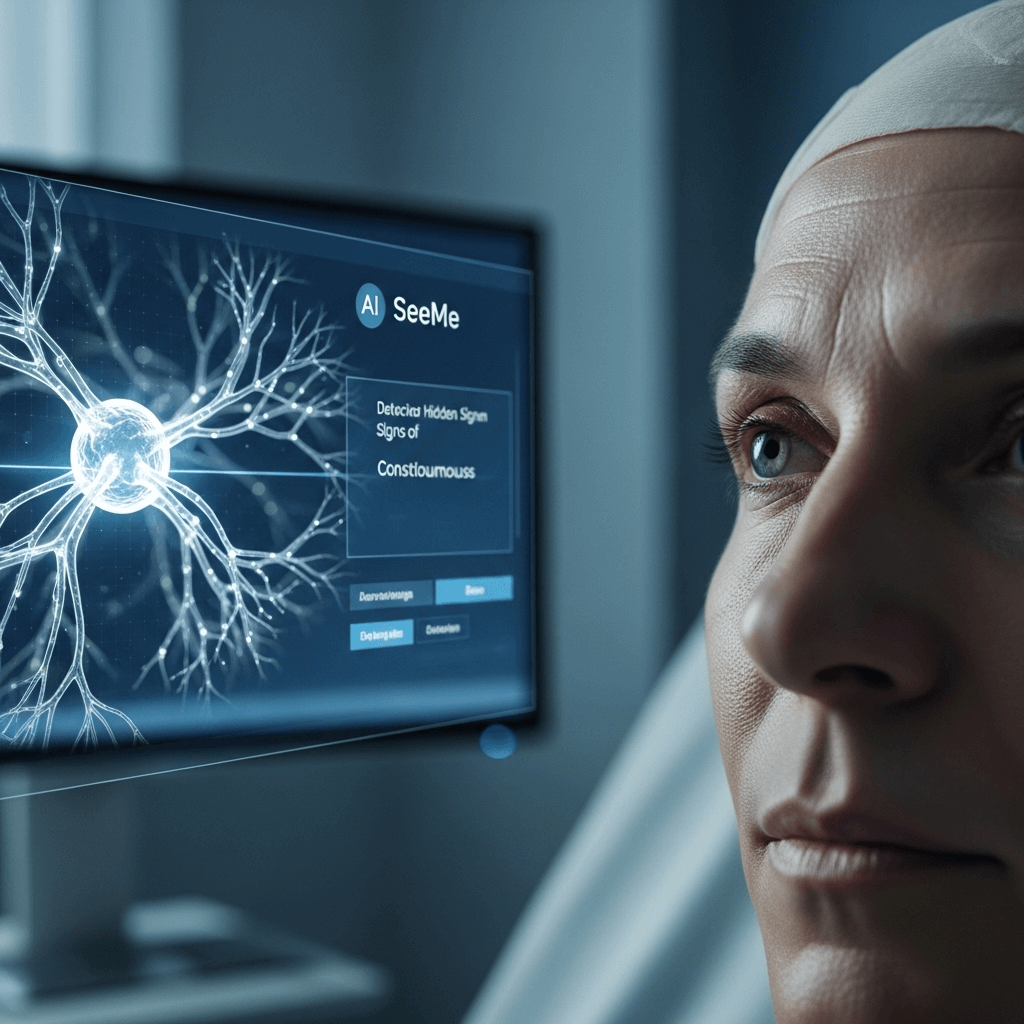
This is precisely where the AI tool SeeMe steps in. Researchers developed SeeMe to address this critical diagnostic gap. Specifically, SeeMe analyzes complex brain activity patterns, such as those captured by electroencephalography (EEG), to identify neural signatures indicative of consciousness. Unlike human observers, the AI can process vast amounts of data and detect minute, often imperceptible, fluctuations and synchronizations in brain waves that correlate with awareness and cognitive processing. Therefore, SeeMe actively detects hidden signs of consciousness, offering an objective and sensitive method for consciousness detection that traditional clinical assessments simply cannot match.
Transforming Patient Assessment and Future Care for Brain Injury Patients
The ability of the AI tool SeeMe to accurately identify hidden signs of consciousness holds profound implications for brain injury patients and their families. Firstly, a confirmed diagnosis of even minimal consciousness can significantly impact treatment strategies. Knowing a patient possesses some awareness guides medical teams toward more personalized and potentially intensive rehabilitation programs, which can improve their quality of life and potentially foster further neurological recovery. Moreover, it profoundly affects ethical considerations and end-of-life decisions, providing families with clarity and peace of mind.
Furthermore, this advanced medical technology paves the way for a more nuanced approach to patient assessment. By distinguishing between truly unconscious patients and those with covert awareness, SeeMe ensures that all brain injury patients receive care that aligns with their actual neurological status. Ultimately, the integration of AI like SeeMe into clinical practice represents a paradigm shift. It empowers healthcare providers to uncover previously undiagnosed awareness, leading to better-informed decisions, enhanced patient advocacy, and a more hopeful outlook for individuals on the long road to neurological recovery. This breakthrough truly promises to elevate the standard of care for our most vulnerable patients.
The AI tool SeeMe marks a pivotal moment in understanding and caring for brain injury patients. By meticulously uncovering hidden signs of consciousness, this technology offers a new layer of diagnostic precision. Ultimately, SeeMe’s capability not only refines our medical assessments but also reignites hope for improved outcomes, ensuring a more compassionate and informed approach to consciousness detection and care for those living with severe brain injuries.
Article Source: News-Medical.net