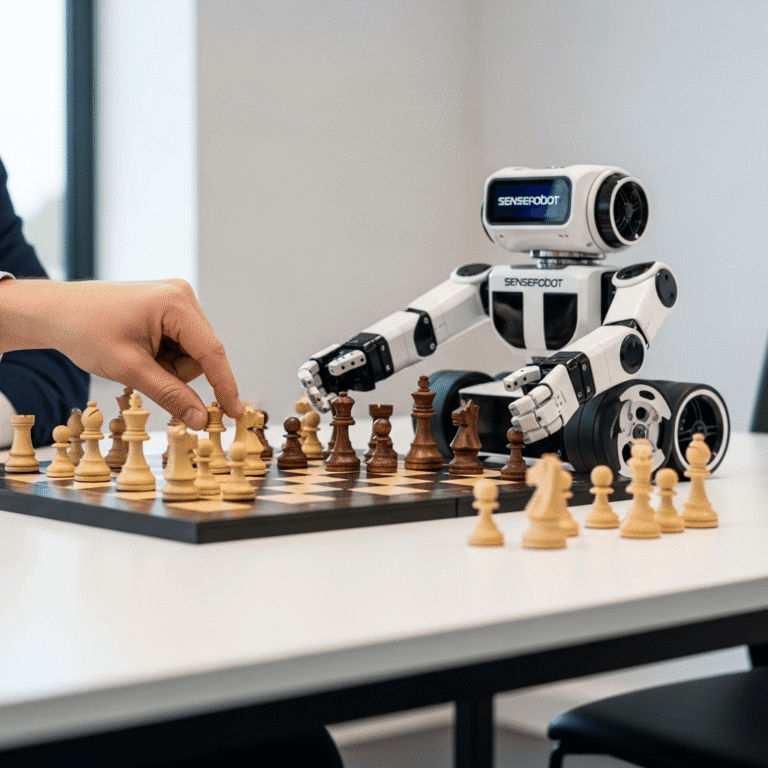

AI & Critical Thinking: Enhancing Student Skills in Higher Ed
Many worry that artificial intelligence (AI) might reduce critical thinking abilities in students. However, emerging perspectives suggest a different reality. Far from eroding intellectual depth, AI can actually improve critical thinking in higher education. This article explores how AI tools, when properly integrated, become powerful allies in developing essential analytical and problem-solving skills for students.
AI as a Catalyst for Personalized Learning and Direct Feedback
Firstly, AI significantly enhances critical thinking by offering highly personalized learning experiences. Traditional education often uses a one-size-fits-all approach, which can hinder students who learn differently. AI, however, analyzes individual student performance and learning styles. It then suggests tailored resources, adjusts the pace of learning, and identifies specific areas where a student needs more practice. Consequently, students can grasp fundamental concepts more thoroughly, which truly builds a stronger foundation for complex thought processes.
Moreover, AI provides invaluable instant feedback systems. Imagine a student completing an essay or a complex problem; AI can offer immediate, constructive feedback on their work, flagging misconceptions or logical gaps. This rapid iteration allows students to learn from their mistakes almost instantly, refining their arguments and thought processes without delay. Indeed, this immediate guidance encourages self-correction and continuous improvement, fostering a deeper engagement with the material and significantly improving critical thinking skills.
Empowering Educators and Equipping Students with Advanced Tools
Furthermore, AI does not only benefit students directly; it also empowers educators. By automating mundane administrative tasks, such as grading multiple-choice questions or scheduling, AI frees up valuable time for instructors. Thus, educators can dedicate more attention to facilitating deeper discussions, providing personalized mentorship, and designing complex problem-solving activities that directly foster higher-order thinking skills. This shift allows human interaction to focus on the most nuanced aspects of learning, where genuine critical thinking development occurs.
In addition, AI equips students with advanced tools for navigating and understanding the world. AI can help students sift through vast amounts of information, identify patterns, and even pinpoint potential biases in data or arguments. This teaches them to critically evaluate sources, a cornerstone of effective critical thinking in the digital age. Moreover, AI-powered simulations and virtual labs offer safe environments for students to apply theoretical knowledge to real-world problems. These interactive scenarios challenge students to make decisions, analyze consequences, and adapt their strategies, thereby honing their analytical skills and preparing them for complex professional challenges in their future careers. Therefore, AI becomes a powerful ally in higher education innovation, not a replacement for human intellect.
In summary, AI offers immense potential to enhance critical thinking skills within higher education. By delivering personalized learning, instant feedback, and freeing educators for deeper engagement, AI truly acts as a powerful educational partner. Embracing AI thoughtfully nurtures more discerning, analytical, and adaptable students. Ultimately, AI equips the next generation with essential tools for navigating complex information and making informed decisions.